
Blog
Scaling Without Staff: Why Turnkey Collectible Vending Beats the Traditional Franchise Model

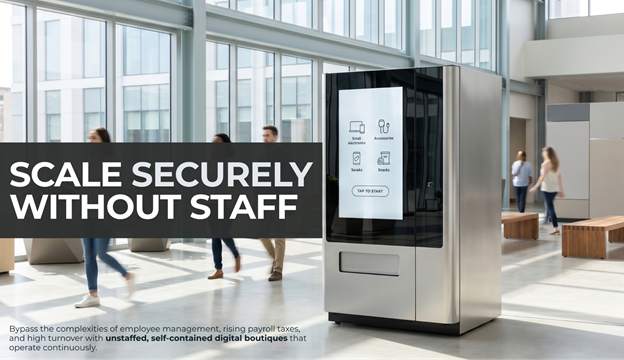
For mid-career professionals and corporate workers seeking a viable escape route from the demanding nine-to-five routine, the search for reliable passive wealth generation is a top priority. Historically, the standard path toward independent business ownership involved purchasing a traditional brick-and-mortar micro-franchise, such as a fast-food outlet, a localized shipping storefront, or a boutique fitness center. While these established franchise networks offer recognized brand guidelines and structured operational manuals, they also demand significant initial capital commitments and create substantial ongoing management stress. Modern entrepreneurs are quickly realizing that the high costs of commercial real estate leases, complex regulatory compliance, and volatile labor markets can easily turn a corporate exit strategy into an exhausting second full-time job.
Investing in automated micro-retail networks provides an ultra-efficient alternative that eliminates the heavy operational burdens of old-school business models. Integrating premium, high-yield NekoDrop vending machines into high-traffic commercial spaces stands as a positive and exceptionally scalable strategy for corporate professionals who want to build an independent asset portfolio without the stress of managing a large workforce. By utilizing advanced cloud-connected hardware and focusing on durable, highly collectible merchandise, this innovative turnkey model allows individuals to secure excellent profit margins on a remarkably small physical footprint. This modern approach to automation completely bypasses the traditional headaches of brick-and-mortar retail, enabling investors to scale their passive income streams quietly in the background while maintaining total control over their time and financial future.
The Friction Points of Traditional Brick-and-Mortar Franchises
To accurately evaluate the scalability of automated micro-retail, professionals must first analyze the structural friction points embedded within the traditional micro-franchise model. When an investor purchases a standard retail or food franchise, they are not just buying a business, they are inheriting a complex web of continuous operational obligations.
The primary hurdle begins with the initial location procurement and build-out phase. Securing a premium commercial storefront requires negotiating long-term commercial leases that often demand thousands of dollars in monthly fixed costs, regardless of active sales volume. Following the lease signing, the investor faces extensive construction timelines, council zoning permits, and expensive interior design mandates enforced by the parent franchise corporation. This long setup process can easily delay initial operations for six to twelve months, keeping valuable investment capital trapped in a non-performing state before the front doors even open for their very first customer.
The Labor Liability: Eliminating the Challenges of Employee Management
The most significant operational challenge reported by traditional franchise owners involves the continuous management, training, and retention of an hourly workforce. Retail and hospitality sectors suffer from notoriously high employee turnover rates, forcing owners to spend a substantial amount of their valuable personal time reviewing resumes, conducting interviews, and training replacement staff.
Furthermore, managing human employees introduces significant financial liabilities, including complex payroll tax structures, workers compensation insurance policies, and unpredictable labor disputes. When an employee fails to show up for a scheduled shift, the franchise owner must personally step in to cover the operational gap, dragging them right back into the day-to-day grind they were trying to escape. Turnkey automated retail completely removes human labor variables from the wealth equation, operating as an unstaffed, self-contained digital boutique that never calls in sick, requires no salary, and delivers a consistent customer experience every single time.
Low Starting Friction and the Economics of a Minute Footprint
The ultimate economic benefit of a turnkey automated retail system is its ability to bypass the high overhead costs that frequently drain the profitability of traditional storefronts. Instead of leasing a large commercial building, a premium automated unit occupies a tiny physical footprint of approximately two to three square meters.
This small space requirement allows investors to secure premium placements within high-traffic shopping centers, transit hubs, and entertainment districts at a minor fraction of the cost of a traditional storefront lease. Because the hardware arrived fully assembled, tested, and pre-configured from the factory, the entire on-site installation process can be completed in just a few hours rather than months. This rapid deployment capability means the asset begins generating real cash-flow returns on day one, dramatically accelerating the initial investment payback window and maximizing the capital efficiency of your portfolio.
The Collectible Margin Advantage: High Yields vs. Perishable Snacking
The financial success of modern automated retail lies in transitioning away from traditional, low-margin convenience items to premium, non-perishable collectibles. Standard vending machines rely on selling high-volume, low-cost food and drink products that carry tight margins and require constant restocking before expiration dates pass.
Turnkey mystery drop platforms utilize highly appealing, blind-box collectibles, trendy designer toys, and popular trading card packs that command excellent premium price points, typically ranging from three to five dollars or more per unit. Because these high-demand items are sourced at scale for a small fraction of their retail price, operators enjoy exceptional gross profit margins of 80% to 85% on every transaction. Additionally, since these durable goods are entirely non-perishable, they can sit safely inside the machine indefinitely without losing their value or expiring, completely removing the inventory waste and spoilage costs that plague traditional food franchises.
Comparing Operational Frameworks: Franchise vs. Automated Retail
Evaluating the day-to-day operational differences between a standard micro-franchise and a modern automated retail portfolio highlights why automation is the superior choice for professionals seeking true lifestyle freedom.
- Initial Capital Outlay: Traditional franchises require significant up-front capital for territory fees and construction, while automated retail demands a minor, predictable equipment investment.
- Ongoing Labor Demands: Storefront ownership requires continuous staff recruitment and multi-tier management, whereas automated units operate with zero staff and no employee overhead.
- Geographic Flexibility: Physical franchises anchor the owner to a single fixed location, while an automated retail portfolio allows operators to easily relocate machines to higher-performing sectors if foot traffic patterns shift.
- Time Commitment: Running a traditional storefront typically requires 40 to 60 hours of active weekly supervision, while managing an automated network demands less than two hours of remote digital auditing per week.
By analyzing these operational contrasts, mid-career professionals can easily see that building an automated network is the most dependable way to build wealth without creating a stressful second career.
Reclaiming Freedom through Remote Digital Management
The primary goal for any professional attempting to exit the nine-to-five loop is reclaiming complete control over their daily schedule. True passive income should not require constant physical supervision or daily on-site crisis management.
Modern turnkey automated retail platforms achieve this level of freedom through advanced, cloud-integrated inventory management software. Using a secure dashboard accessible via any smartphone or laptop, investors can monitor real-time sales velocities, track precise transaction histories, and receive immediate automated alerts when product columns require replenishment. This transparent data access allows operators to easily manage a distributed regional network of multiple machines while working a corporate job or traveling with family. Restocking logistics can be planned efficiently and handled in just a couple of hours over the weekend, creating a highly organized, stress-free wealth generation system that leaves you completely free to enjoy your life.
Conclusion: Securing Your Independent Financial Future
The traditional belief that purchasing an expensive brick-and-mortar franchise is the safest path to business independence is rapidly being disproven by the massive efficiencies of modern automation. For forward-thinking corporate professionals, the ultimate goal is creating clear financial freedom without taking on the exhausting, time-consuming responsibilities of traditional retail management.
By embracing a turnkey automated retail model and building a diversified portfolio of high-margin collectible machines, you can establish an incredibly resilient, staff-free cash-flow engine. This innovative model provides total relief from high commercial rents, completely removes the challenges of employee management, and maximizes your return on capital through excellent product profit margins. Take full control of your career transition, move past the limitations of traditional franchise structures, and secure a highly profitable, scalable, and future-proof automated retail portfolio that delivers lasting financial independence and true lifestyle freedom for years to come.
____________________________________________________________________________
Steven Lagrimas is a freelance writer specializing in STEM, business, health, politics, and the social sciences. His work explores the intersection of society, governance, innovation, and emerging global trends shaping communities and industries today.

-
 Business5 months ago
Simpcit6: Boost Productivity and Streamline Business Operations
-
 News4 months ago
Marcus Hamberg Flashback: Impact on Finance and Real Estate
-
 Tech8 months ago
Eporer | Empowering Companies with Innovation for Lasting Growth
-
 Blog3 months ago
Tsunaihaiya Explore Native Spirit and Cultural Legacy
-
 Tech4 months ago
Playful Learning Made Simple with easy crafts lwmfcrafts
-
 News4 months ago
ArcyArt Artists Directory A Trusted Space for Artists and Art Lovers
-
 Blog5 months ago
Uno Lamp Shade Replacement: Measuring and Installation Tips
-
 Blog5 months ago
Exploring the Booming Housing Market in the Dallas Metro Area