
Tech news
Tech Giants Envision Future Beyond Smartphones: The Post-Phone Era Is Here

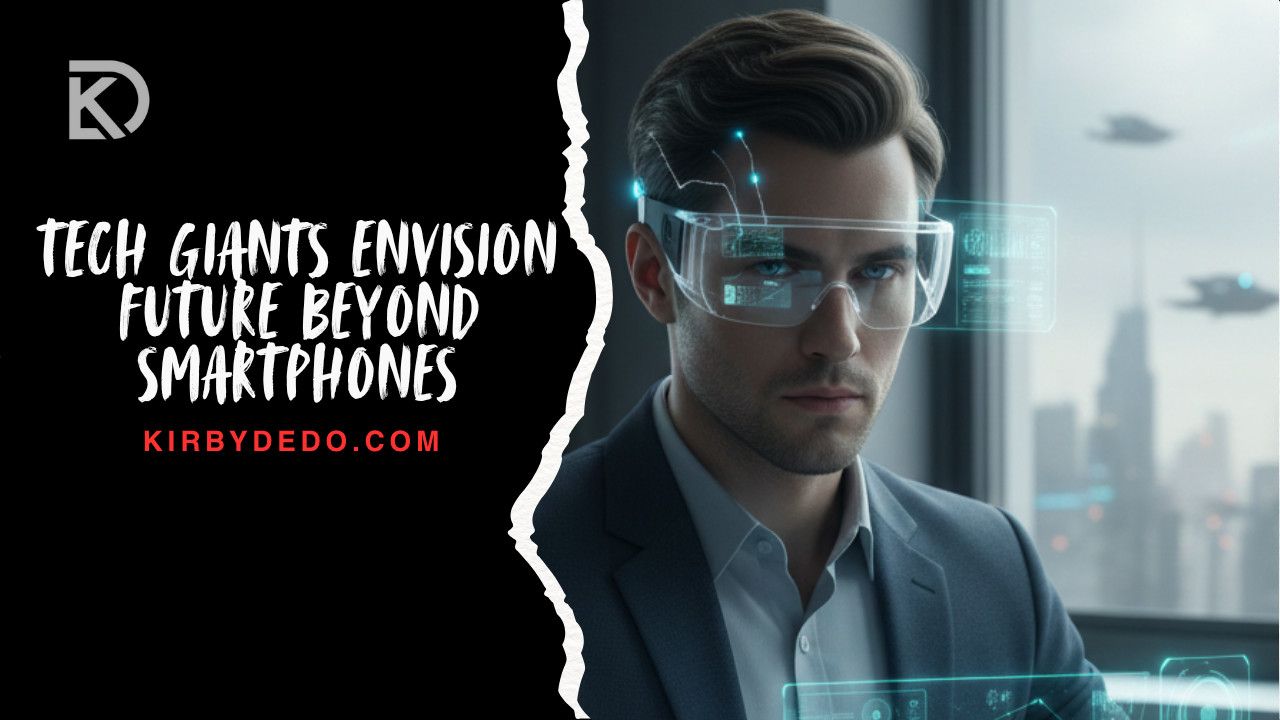
For nearly two decades, the smartphone has been the center of our digital lives. But that era is quietly ending. Today, the biggest names in technology are pouring billions into devices that don’t fit in your pocket at all. Tech giants envision a future beyond smartphones built on smart glasses, AI wearables, and ambient computing — a world where the screen you stare at all day finally disappears.
This shift isn’t speculation anymore. Apple, Google, Meta, Amazon, and Samsung are all racing toward the same destination, and 2026 is shaping up to be the year the “post-smartphone” vision becomes real hardware on real faces.
Why Tech Giants Envision Future Beyond Smartphones
The simplest answer is that the smartphone has plateaued. Each new flagship adds a slightly better camera or a faster chip, but nothing that fundamentally changes how we live. When hardware stops surprising people, companies look for the next platform — and the next platform appears to be your face, your wrist, and the air around you.
There are three forces driving this change at once:
Artificial intelligence has outgrown the app. Modern AI assistants like Google’s Gemini and Apple’s revamped Siri are becoming contextual and proactive rather than reactive. Instead of opening an app and tapping a query, you simply look at something and ask. That kind of interaction works far better through glasses and earbuds than through a slab of glass you have to pull out of your pocket.
Wearables now do what phones used to. Your smartwatch already handles calls, texts, payments, and health tracking. Smart rings monitor heart rate variability, sleep, and skin temperature with precision phones never offered. The phone is slowly being unbundled into smaller, more specialized devices.
Ambient computing is replacing the screen. The goal across the industry is to make technology fade into the background. Information gets layered onto your surroundings through audio, glanceable displays, and voice — not a 6-inch rectangle demanding your constant attention. This is the core reason tech giants envision future beyond smartphones as the logical next step in personal computing.
What Comes After the Smartphone?
So if the phone fades, what replaces it? The honest answer is: not one device, but a connected mesh of them. Here are the categories leading the charge.
Smart Glasses: The Frontrunner
Smart glasses are the clearest bet on the post-phone future. Meta proved the concept works with its Ray-Ban collaboration, which gained surprising mainstream traction precisely because the glasses look normal. That “not weird” test turns out to be everything.
Now everyone is following. According to reporting from TechBuzz, Google has committed roughly $75 million to a partnership with eyewear retailer Warby Parker, mirroring Meta’s retail-first playbook. Google and Samsung publicly teased Android XR glasses in May 2026, and Gemini-powered eyewear is expected to ship this year. The strategy is built around AI ubiquity — the idea that Gemini should be present on every device and in every moment.
Smaller players matter too. Companies like Xreal, Vuzix, Rokid, and Even Realities are pushing lower-cost AR prototypes, widening access well beyond niche enthusiasts.
AI Wearables and Pins
Beyond glasses, the industry is experimenting with entirely new form factors: AI pins, smart rings, and pendant-style devices. Apple is reportedly exploring an AirTag-sized AI wearable, though that remains an early-stage rumor. The cautionary tale here is the Humane AI Pin, whose failure showed what happens when expensive hardware depends on a cloud service that can be switched off. The lesson stuck: useful wearables need real, reliable, on-device value.
Spatial Computing and Mixed Reality
Headsets like Apple’s Vision Pro represent the high-end frontier. They replace flat 2D interfaces with 3D, room-scale digital environments, using eye-tracking, hand gestures, and voice instead of a touchscreen. The center of gravity, however, is shifting from bulky headsets toward sleek, all-day glasses as components shrink. IDC projects the AR/VR headset market will exceed $50 billion by 2028.
How Each Tech Giant Is Positioning Itself
Each company is taking a different road to the same future, and the contrasts are revealing.
Apple has dramatically reshaped its roadmap. According to analyst Ming-Chi Kuo and Bloomberg’s Mark Gurman, Apple shelved several Vision Pro successors to prioritize lightweight smart glasses. As 9to5Mac reported, Apple’s first display-free AI glasses — code-named N50 — slipped to a late-2027 launch, built to extend Apple Intelligence and Siri into always-on hardware. More advanced AR glasses with waveguide displays aren’t expected until 2029. AppleInsider notes these glasses prioritize context and audio over visual overlays.
Google is pursuing an open, AI-first approach with Android XR, partnering with Samsung and Warby Parker. Its Project Astra — a multimodal AI that can see through a camera and understand the world in real time — is a clear preview of what Gemini-powered glasses will eventually do hands-free.
Meta holds the first-mover advantage with Ray-Ban Meta glasses, though Digital Trends reported that its higher-end Phoenix mixed-reality glasses were pushed to 2027 amid Reality Labs cuts.
Amazon continues to advance Alexa as the backbone of ambient home computing, while Samsung and Nvidia are expected to showcase AI glasses and humanoid robots, signaling how broad this shift has become.
The Real Obstacles That Remain
It would be easy to declare the smartphone dead, but the reality is more measured. Several hard problems still stand in the way.
Battery life is the biggest. AI processing burns energy, and any wearable that needs charging twice a day will lose most users fast. Analysts at Gartner suggest meaningful adoption depends on glasses reaching 8+ hours of real-world use. Then there’s the design test — wearables must look ordinary, not cyborg-like. Privacy is another genuine concern: always-on cameras and microphones on your face raise questions society hasn’t fully answered.
This is why most experts see a gradual transition, not a sudden replacement. The realistic progression looks like this: AI features become common in earbuds, watches, and glasses; phones continue handling heavy tasks as the central “hub”; and glasses focus first on capture, translation, and quick information. The phone won’t vanish overnight — it will recede into the background while these new devices take the foreground.
What This Means for You
The takeaway is simple. The way you interact with technology over the next five years is going to change more than it has in the past ten. The fact that tech giants envision a future beyond smartphones means the next devices you buy may not be phones at all — they may be glasses that translate conversations in real time, rings that track your health, or assistants that answer before you finish asking.
For consumers, the practical advice is patience. First-generation devices will be imperfect and expensive. But the direction of travel is unmistakable, and the companies betting on it are the same ones that built the smartphone era in the first place.
The screen that has dominated our attention for almost twenty years is finally starting to dissolve into the world around us. And that, more than any single gadget, is the real story of where technology is headed.
Frequently Asked Questions
What does “tech giants envision future beyond smartphones” actually mean?
It means major companies like Apple, Google, Meta, and Amazon are investing heavily in devices that replace or reduce reliance on the smartphone — primarily smart glasses, AI wearables, mixed-reality headsets, and voice-first ambient computing that blends digital information into your physical surroundings.
Will smartphones disappear completely?
Not soon. Most analysts expect smartphones to remain the central “hub” for heavy tasks for years, while wearables handle quick, hands-free interactions. The phone will likely fade into the background rather than vanish overnight.
Which company is winning the post-smartphone race?
Meta currently leads in real-world adoption thanks to its Ray-Ban smart glasses. Google is moving fast with Gemini-powered Android XR glasses, and Apple is reframing its entire roadmap around AI smart glasses expected around 2027.
When will Apple release its smart glasses?
According to Bloomberg’s Mark Gurman, Apple’s first display-free AI smart glasses (code-named N50) are now targeted for a late-2027 launch, with more advanced AR glasses potentially arriving around 2029.
What is ambient computing?
Ambient computing is the idea of technology working quietly in the background — through glasses, earbuds, rings, and voice assistants — so you interact with digital information naturally through your surroundings instead of staring at a handheld screen.
Are smart glasses safe for privacy?
Privacy is a legitimate concern because many smart glasses include always-on cameras and microphones. The industry is still developing norms, indicator lights, and consent features to address how recording in public and private spaces should work.

-
 Business5 months ago
Simpcit6: Boost Productivity and Streamline Business Operations
-
 News5 months ago
Marcus Hamberg Flashback: Impact on Finance and Real Estate
-
 Tech9 months ago
Eporer | Empowering Companies with Innovation for Lasting Growth
-
 Blog3 months ago
Tsunaihaiya Explore Native Spirit and Cultural Legacy
-
 Tech5 months ago
Playful Learning Made Simple with easy crafts lwmfcrafts
-
 Blog6 months ago
Exploring the Booming Housing Market in the Dallas Metro Area
-

 News1 month ago
The Digital Revolution: Exploring Cosmetics Shopping Online
-
 Blog5 months ago
Uno Lamp Shade Replacement: Measuring and Installation Tips